Resolve supply chain issues before they impact customers
Supply chain teams need to catch risks across inventory, demand, and suppliers before they hit customers—then agree what to do with the same definitions everyone trusts.
Demo video
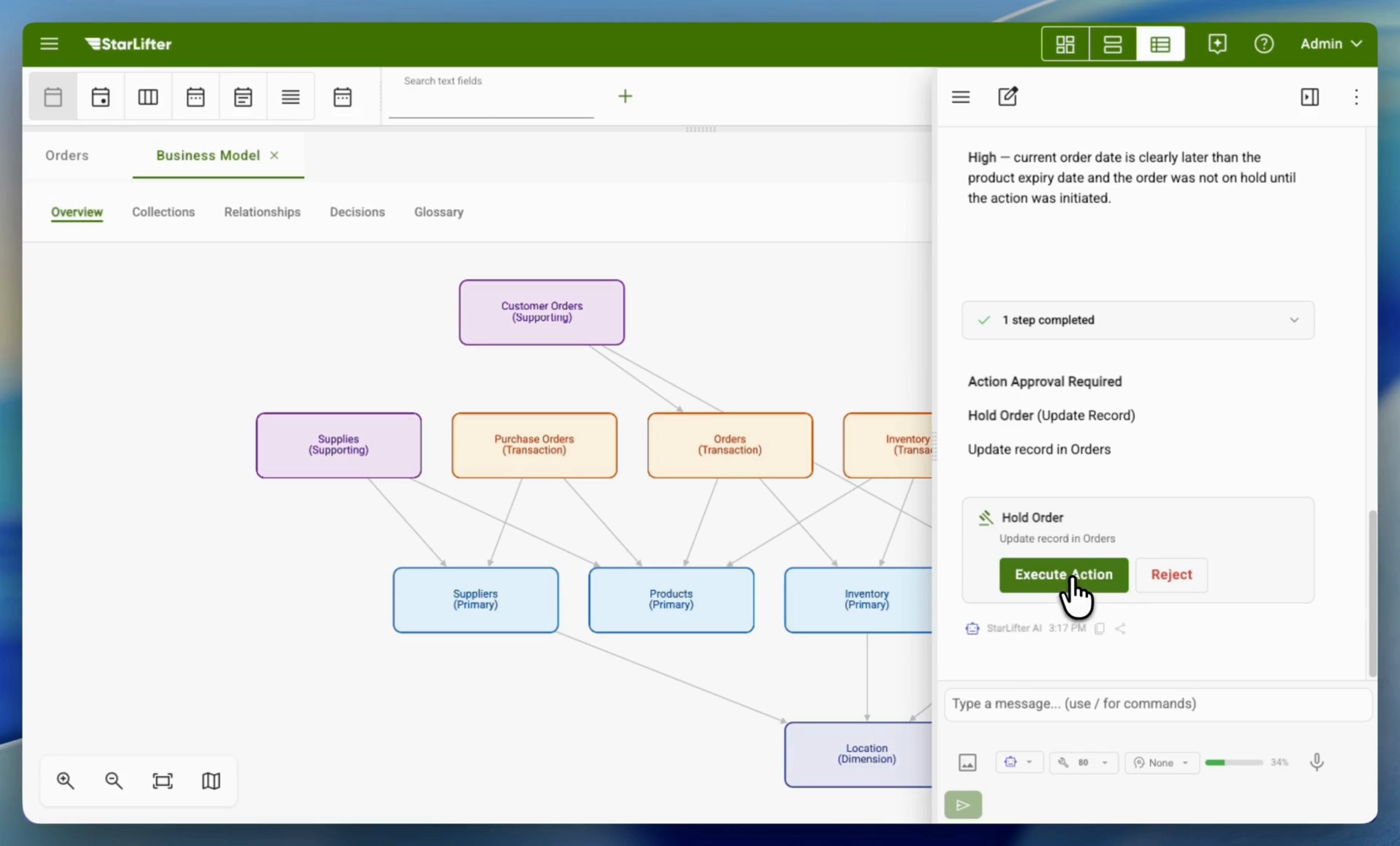
Signals that prevent stockouts and supply disruptions
Demand–supply mismatches, expiring inventory, and procurement gaps surfaced as decisions you can act on—recorded for our demo library on the videos page.
Operating gaps
When shelf life, lots, and “sellable” inventory disagree
A common pattern: one system shows units as available while quality, compliance, or dating logic says they should not ship. Teams want a single place to reconcile policy, expiry, and open demand before anything hits the dock—rather than discovering the mismatch in a customer escalation.
When demand is visible but coverage is not
Forecasts, orders, or consumption can point at sustained need for a SKU while purchase orders, supplier commits, or inbound ASNs lag. Leaders usually need early visibility into that gap—not another manual join between the planning tool and ERP.
When stock risk is about pace, not just quantity on hand
On-hand balances can look fine while burn rate and lead-time uncertainty say otherwise. Many organizations model days of supply and confidence in vendor data so planners can prioritize before the backlog shows up as a stockout.
Example Workflow
One possible weekly rhythm—your meetings, owners, and tools will differ. The point is a governed surface where signals, severity, and next steps stay aligned.
Open the risk overview
Expiry exceptions, demand without coverage, and low days-of-supply appear in one place with severity and context.
Triage compliance and fulfillment holds
Confirm whether holds were applied for at-risk lines and initiate the right follow-up when they were not.
Close procurement and supplier gaps
Prioritize SKUs with demand but weak PO coverage and coordinate with procurement or suppliers from the same surface.
Share the daily snapshot
Export or push a concise summary so leadership sees what changed and what was done—without chasing spreadsheets.
Patterns teams model here
Entities, thresholds, and sources you already map become the backbone for what shows up here.
- • Compare sellable inventory to compliance or dating rules before release
- • Highlight SKUs where demand and procurement coverage diverge
- • Rank candidates for replenishment or expedite using velocity and lead-time confidence
- • Route context to procurement or suppliers with approvals your organization owns
- • Expose data gaps (missing lead times, stale supplier feeds) so plans state their assumptions
Data Sources & Integrations
Supply-chain signals are usually modeled in warehouses, databases, and spreadsheets before they become operational truth. StarLifter connects to the same governed analytical layer and operational systems we support across the platform—so teams work from one decision surface.
Snowflake, Databricks, Google BigQuery, and Amazon Redshift—where inventory, demand, and supplier metrics are often curated.
Azure MS SQL and other SQL systems where operational or analytical tables already live.
Salesforce, HubSpot, and ServiceNow for context and governed write-backs where your teams work today.
CSV and uploaded tables for plans, exceptions, or sources that still live outside the warehouse.
For the full list of supported connections and how they map to your stack, see our Integrations page. If a source you need is not listed yet, ask us—we are adding connectors over time.
2-Week Deployment
Illustrative starting cadence. Week-one scope follows the sources and grain you already trust.
Connect & map
- • Connect inventory, demand, and supplier data sources
- • Define SKU, location, and supplier grain for signals
- • Configure expiry, coverage, and stockout rules
Validate & launch
- • Validate signals with planners and operations leads
- • Train teams on views, actions, and approvals
- • Go live with ongoing tuning support
Move from signal to action, faster
Bring a concrete supply-chain scenario—we will map how your signals, approvals, and systems of record could sit on one governed surface.
Join the Waitlist